Shoulder Carry Flip
Two people, one shoulder carry, and a switch that makes you look twice.
In shortThe Shoulder Carry Flip is a short two-person video built around a shoulder carry and a quick change of pose. In the I’m the One versions, the person being carried swings into view, making the ending look like a change in who is carrying whom. The filmed trend and the AI remake are different things: creator posts show a performed carry, while photo-to-video templates simulate the movement using uploaded pictures. The early outdoor clip featured here is a nine-second TikTok by @maxarchi21. KickClap cannot generate a Shoulder Carry Flip AI video yet. This page lets you watch the source, understand the format and recognize what a photo-based remake changes.
What the Shoulder Carry Flip is
It is a duo reveal rather than a long dance routine. The opening establishes one person carrying the other at shoulder level; a short turn or swing changes the silhouette, and the person who was being carried takes the final pose. From a fixed camera, overlapping bodies can make that ending look like a role reversal. The “flip” names the visual change; it does not mean every version contains an aerial somersault.
Couples and friends use the format, and the I’m the One or “cause I’m the one” name comes from the sound cue associated with many takes. Not every shoulder-carry search result shows the same move: an outdoor flip, a garage turn and a simple shoulder-riding animation can be different reference clips. Watch the actual source before treating a template name as a promise.
Where the Shoulder Carry Flip came from
There is no confirmed single originator in the sources checked. @maxarchi21’s early outdoor TikTok was published on July 23, 2026 in Asia/Shanghai time. The nine-second clip had 3.6 million plays when checked on November 7. It predates the September and October examples linked below, but that does not establish the first-ever shoulder carry.
The format reached very different audiences: Maxxine’s “partner in crime” post appeared in September, and Brooke Monk’s take followed in October. A dated October 28 roundup covered several couple versions. By November 2, a public tutorial was explicitly calling it a Shoulder Carry Flip AI trend. Dates for individual TikToks on this page use Asia/Shanghai; they may be one day later than dates shown elsewhere.
- @maxarchi21 posts the nine-second outdoor duo clip featured here. It is an early example we could verify, not a confirmed first-ever performance (TikTok video 7665449875634523414).
- @maxxinedupriwwe posts “partner in crime 🔫” on the same TikTok sound. Its public metadata showed 22.1 million plays when checked on Nov 7, 2026; counts change.
- Brooke Monk posts a nine-second take using the same sound (TikTok video 7699584811253419294). Its metadata showed 18.8 million plays when checked on Nov 7, 2026.
- Trends by Masterhooks publishes a roundup featuring the Shoulder Carry Flip and several couple clips. The article is evidence of the late-October spread, not proof of who invented it.
- @hxyxbv2 posts a tutorial captioned “How to Make the Shoulder Carry Flip AI Trend,” with CapCut and photo-to-video terms. This documents the AI-remake branch, not the origin of the physical move.
Why the carry-and-switch works
The opening makes the two roles immediately clear: one carries, one is carried. The change of pose then makes viewers reassess the picture. It is a compact joke about who is really in charge, with a final face or pose that gives the clip a punchline. Friends can play the same joke without making it a romantic video.
An AI remake answers a different need: “Can we be in this without doing the lift?” That is why people add “AI video,” “filter” or “template” to the search. A generated clip can simulate the scene without a physical carry, but it is not evidence that either person performed the move.
The filmed clip, the switch and the AI remake
- Filmed duo. Two people perform a carry and change of pose for a phone camera. The featured TikTok is a creator-source example, not a KickClap result.
- I’m the One switch. A related carry-and-reveal format uses a short sound cue and overlapping bodies to suggest a change of roles. The exact turn and ending depend on the post.
- Photo-to-video remake. A template or reference-guided video tool uses photos to personalize a simulated carry. Some workflows take a picture of each person; others need a prepared image showing both people. A generic shoulder-riding animation is not necessarily this flip.
The featured clip, Maxxine’s post and Brooke Monk’s post share TikTok sound ID 7266546963326962464, listed as “original sound.” Other versions may use reuploads. Open the sound from the particular post you want to reference rather than choosing a song by the words “I’m the One” alone. A photo upload does not automatically include the original music or rights to it.
What to get right in a remake
Choose the reference before choosing a tool. For a close remake, check that the workflow supports the actual carry-and-switch motion, two distinct identities and the intended roles. Image-to-video from a still can make a new carry scene, but a prompt alone does not specify every movement in an existing performance. Check whether the tool expects separate photos or a shared starting image; do not assume every template uses the same input order.
Use clear photos of consenting adults and review the moment the bodies overlap. Look for mixed faces, extra hands, disappearing legs and an ending that changes who is who. Preview the audio separately, then align the reveal in your editor or publishing app using music you are allowed to use. Label a simulated result as AI-generated.
Do not attempt a shoulder lift or flip just to match a social clip. A stationary, ground-level pose or an edited reveal can communicate the joke without lifting anyone. This is a trend explainer, not stunt instruction, and KickClap does not provide a generator for this effect.
Can you make Shoulder Carry Flip on KickClap?
Watch the video and explore its source. A photo-to-video creation template is not currently available for this page.
Questions about Shoulder Carry Flip
What is the Shoulder Carry Flip trend?
A short duo video that starts with one person carrying the other at shoulder level, then changes pose for a surprising reveal. Some endings look as if the two people switched carrying roles. The exact move varies by clip.
Is Shoulder Carry Flip the same as the I’m the One trend?
They overlap. I’m the One and “cause I’m the one” are sound-based names used for carry-and-switch clips. Shoulder Carry Flip is a broader descriptive name, also used by AI templates. Check the reference: not every carry video or song with that title is the same trend.
Are Shoulder Carry Flip videos real or AI?
Both versions exist. The trend includes filmed two-person performances, with public examples from July, September and October 2026. AI tutorials and photo-based templates recreate the look without the people doing the carry. A template demo is not proof of a physical performance, and a creator post should not automatically be called AI.
Can KickClap make a Shoulder Carry Flip AI video from photos?
Not yet. This is a watch-only explanation with an official TikTok embed, not a photo-to-video maker. Visit the KickClap homepage for currently makeable templates such as Hotel Lobby. Those templates have their own scenes; they do not produce the Shoulder Carry Flip.
Which kind of AI tool should I use for a shoulder carry remake?
For the recognizable flip, look for a matching motion template or reference-video workflow with support for both people’s identities. A basic image-to-video tool can animate a prepared carry pose, but that is not a guarantee of the same switch. Check a real output, input requirements, likeness handling and audio support before choosing.
How many photos does a Shoulder Carry Flip AI video need?
It depends on the workflow. Two-role templates often ask for one clear photo per person. Other image-to-video modes start from one prepared picture containing both people. Read the role labels and supported inputs; KickClap does not accept photo uploads for this trend.
Can I make the effect without lifting anyone?
A photo-based AI remake simulates the carry, so the subjects do not need to perform it. An edited, ground-level reveal is another option. Do not copy a physical lift from a short clip without appropriate training and supervision.
What sound does the Shoulder Carry Flip use?
The featured TikTok and the linked Maxxine and Brooke Monk posts use sound ID 7266546963326962464, labeled “original sound” on TikTok. Related clips can use different uploads. Open the sound from the post you are referencing; searching “I’m the One” alone can bring up unrelated recordings.
Why do faces or limbs look wrong in an AI shoulder carry video?
Two overlapping bodies, a turn and briefly hidden faces make continuity difficult. Check the swing frame by frame for fused hands, extra legs or switched identities. Clear input photos and a matching reference can help, but no prompt guarantees an artifact-free result.
Sources
- @maxarchi21 on TikTok — featured early duo clip; Jul 23, 2026 (Asia/Shanghai)
- @maxxinedupriwwe on TikTok — “partner in crime 🔫”; Sep 22, 2026 (Asia/Shanghai)
- @brookemonk_ on TikTok — nine-second carry take; Oct 23, 2026 (Asia/Shanghai)
- Trends by Masterhooks — Shoulder Carry Flip roundup; Oct 28, 2026
- @hxyxbv2 on TikTok — “How to Make the Shoulder Carry Flip AI Trend”; Nov 2, 2026 (Asia/Shanghai)
- TikTok — shared original-sound page, ID 7266546963326962464
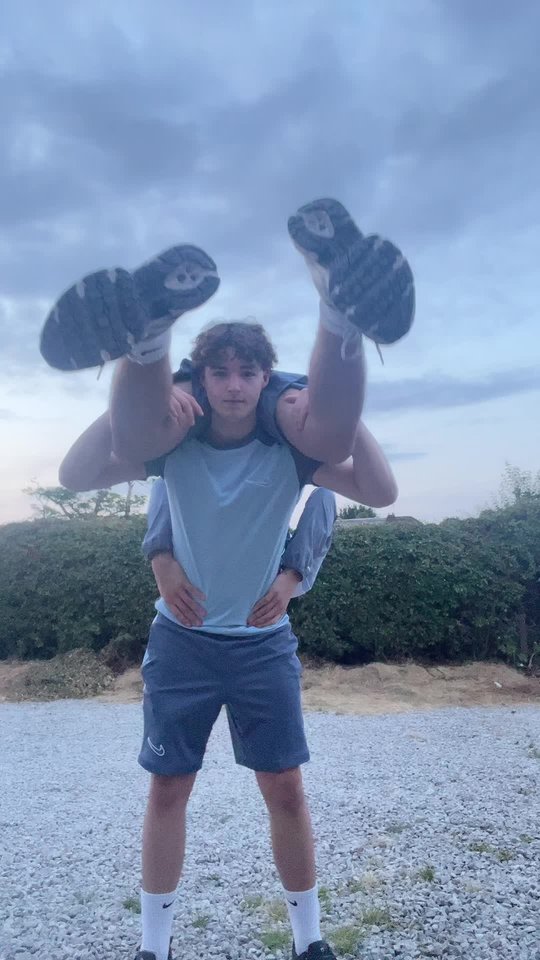
Original TikTok video · @maxarchi21 on TikTok. If the player is unavailable, open the source.
Watch the original clip (source video)