Hope Whoever Stole My Amazon Package
The imaginary thief has your parcel and a very niche Halloween costume.
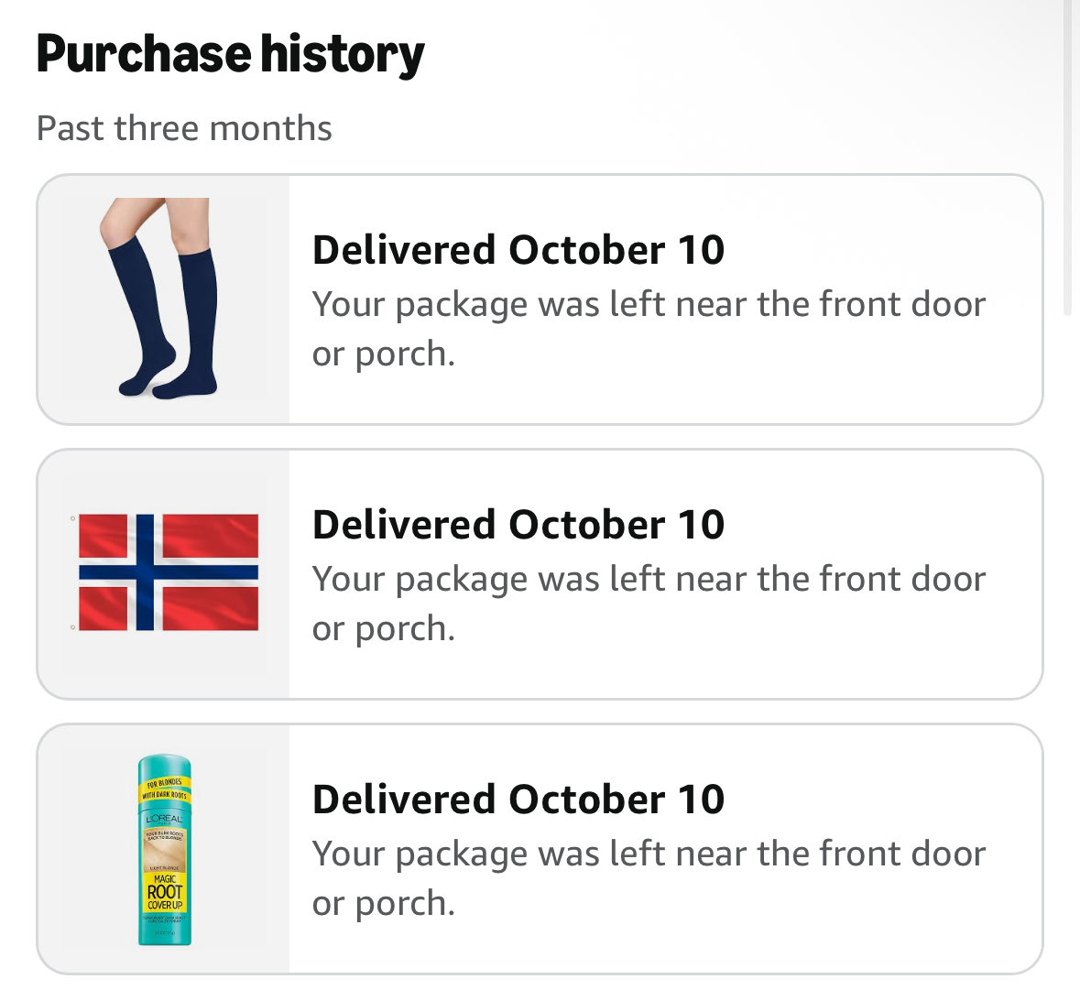
In shortHope Whoever Stole My Amazon Package uses an order screenshot as a costume puzzle. A collection of odd purchases initially looks random; the caption reveals the person, character or object those pieces are supposed to become. Know Your Meme traces the format to an October 2026 X post about an Erling Haaland costume. The theft is the comedic setup. The real reveal is how specifically someone has planned to dress for Halloween.
What Hope Whoever Stole My Amazon Package is
The audience gets to play detective before the caption gives the answer. A wig, clothing item or stack of boxes suddenly becomes meaningful when paired with the named costume. The stranger the combination, the funnier it is to imagine an accidental recipient using it. Treat the format as a joke, not independent evidence of an actual theft.
Where Hope Whoever Stole My Amazon Package came from
Know Your Meme credits @lyssibot5000’s October 11, 2026 post with the early Haaland example. Its collection then documents other costume combinations spreading over the following days. Those examples establish the caption pattern. They do not prove that packages disappeared or that everyone showing a cart completed an order.
- An Erling Haaland costume joke appears in a post by @lyssibot5000.
- Several celebrity, character and performance-based costume versions appear on X.
- A Valorant-map variation extends the joke beyond an ordinary wearable costume.
- Know Your Meme records the package-and-costume caption format.
Why Hope Whoever Stole My Amazon Package spread
It offers a costume reveal without requiring the finished outfit. Each item is both a clue and an object someone might genuinely buy. The audience participation differs from KPop Demon Hunters costumes, where the completed look carries recognition. It also shares Halloweenposting’s enjoyment of unnecessarily specific seasonal references.
What those purchases are supposed to become
- Sports references. The documented examples include Haaland and other sports-related costumes. A few distinctive pieces can establish the person or fan identity.
- Pop-culture outfits. Music and character references make the order into a recognition test. The joke works best for people familiar with that particular look.
- Objects instead of people. One collected variation uses boxes to represent a location detail in Valorant. An inanimate costume can be even more unexpectedly specific.
Can you make Hope Whoever Stole My Amazon Package on KickClap?
Not this one, yet. Here is what we do make — and the rest of the meme guides cover the ones we cannot.
$9.99 once · two photos in, 10 seconds out at 720p, yours to download.
See Hotel LobbyWhat to get right if you make one
Build a short set of recognizable clues, then name the costume. You can use a clearly staged cart instead of claiming a real missing delivery. Crop out addresses, order numbers and payment details before posting. Those details add nothing to the joke and reveal much more than your Halloween plans.
Questions about Hope Whoever Stole My Amazon Package
Was a package necessarily stolen?
No. The format uses a fictional missing-package premise. A meme screenshot alone does not establish a theft.
What makes the screenshot funny?
The caption makes unrelated purchases click into a single unusually specific costume. The imagined thief receives that complete accidental assignment.
Do I need to buy the items?
No purchase is necessary to understand or stage the joke. A cart or an explicitly constructed image can show the required clues.
Can the costume be an object?
Yes. The documented gaming-location example shows that the reveal need not be a person or character.
What should I remove from an order screenshot?
Hide personal and transaction information, including your address and order identifier. Keep only the items needed for the costume puzzle.

Sources
 Hope Whoever Stole My Amazon PackageSource clip