Cat in the Hat Serial Killer Trend
The hat is familiar. The neighborhood warning is fiction.
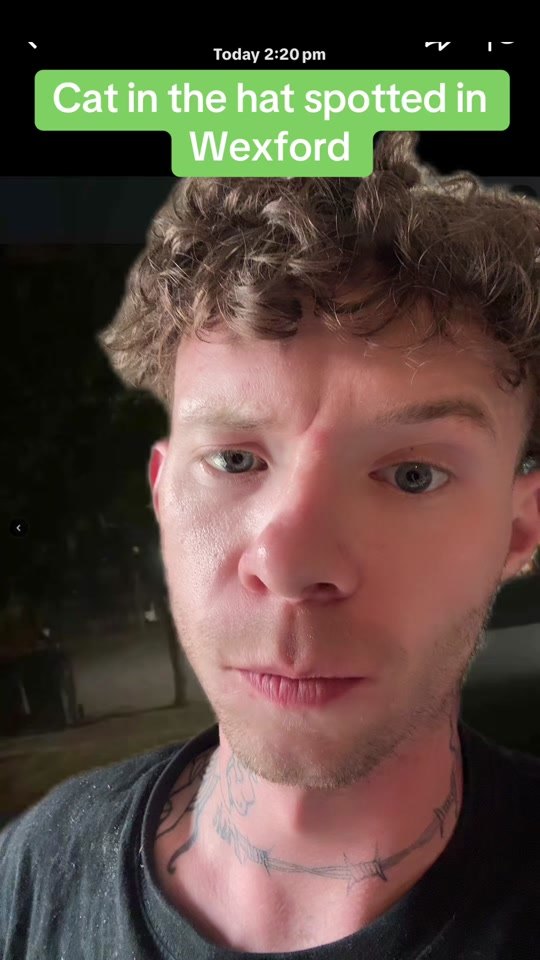
In shortThe Cat in the Hat serial killer trend is a hoax format built from fake sightings of a figure resembling the live-action movie character. Posts place him on nighttime streets, outside homes or in supposed security-camera footage. The frightening framing made some viewers mistake the joke for a real local warning. Irish police publicly rejected the Wexford claims. This is an invented horror story built around a familiar character, not evidence of an actual killer.
What Cat in the Hat Serial Killer Trend is
The format turns a childhood character into an unexpected threat, then gives the image the ordinary packaging of a neighborhood post. The contrast is unsettling, but the local framing creates a second problem: somebody can share the warning without recognizing the fiction. Unlike the openly sentimental AI Zombie Trend, this format can lose its fictional context as it travels.
Where Cat in the Hat Serial Killer Trend came from
Know Your Meme documents purported Wexford sightings circulating in August 2026 without identifying a definitive first poster. An Irish Examiner report dated August 20 records Wexford Gardaí explaining that the images and videos were generated. The police response addressed a false local claim; it should not be retold as confirmation that a costumed attacker was found.
Why Cat in the Hat Serial Killer Trend spread
A recognizable character needs little introduction, while dim streets and security-camera framing borrow the appearance of evidence. A caption naming a nearby place can make the fiction feel personal. The joke survives as absurd horror, but a supposed safety warning changes how people respond. A scary picture and a substantiated local incident are not the same thing.
Can you make Cat in the Hat Serial Killer Trend on KickClap?
Not this one, yet. Here is what we do make — and the rest of the meme guides cover the ones we cannot.
$9.99 once · two photos in, 10 seconds out at 720p, yours to download.
See Hotel LobbyWhat to get right if you make one
If sharing a parody, put the fiction label where it survives a screenshot. Avoid presenting a made-up event as a current neighborhood alert or attaching a real resident’s address to it. A visibly staged costume scene gives the audience clearer context. The AI Halloween Costume Trend offers another way to use familiar horror imagery without claiming an actual emergency.
Questions about Cat in the Hat Serial Killer Trend
Was there a confirmed Cat in the Hat killer in Wexford?
The Irish Examiner reported police rejecting the circulating claim and identifying the images as generated. The meme is not evidence of such a killer.
Why did the posts worry people?
They used familiar locations and warning-style captions. Detached from a joke’s context, those details can resemble a genuine local alert.
Who made the first image?
The documented chronology does not firmly identify a first poster. Avoid assigning an originator without supporting evidence.
Is every later clip made with AI?
Later posts can also be costume skits or other edits. Identify the actual method when it is known instead of assuming all examples are identical.
How can a parody remain clear?
Label it directly as fictional, generated or staged. Do not rely on a hidden hashtag to undo the impression of a real warning.

Sources
 Cat in the Hat Serial Killer TrendSource clip